top of page


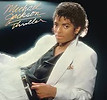
Another musical inspiration is the famous cameroonian saxophonist MANU DIBANGO and his banger " Soul Makossa ". He spent part of his career in Parisian jazz clubs and collaborated with artists like Miles Davis, Sting, John Lee and Hugh Masekela. Influenced by James brown and Fela Kuti, he produced brilliant style mixing jazz funk which led to it being covered by king of pop Mickeal Jackson in Thriller Album produced by Quincy Jones :



To sum up ALEKE music track construction, its created from different musical elements called African Fusion :
- Drums and djembe loop. End of the track, Ndombolo drum style - Congo
- Saxophone by Kesja Bijok, female saxophonist from Krakow - Poland
- Guitare Sebene style from Congolese Music - Rumba music genre.
- Vocalist is a Nigerian Afrofunk singer in New-York based. He has songs released in independent production as african jazz song "Sweet Mother " :



ALEKE
SAXOPHONE & AFRICAN MUSICALITY

Concerning guitare style, its inspired by Pamelo Mounk’a and FRANCO LUAMBO Makiadi, considered father of the 1960s sèbène guitar and masters of Congolese rumba : melodic and hypnotic guitare riff that make people dance during international tours and have influenced generations of African musicians : sebene rumba has evolved with faster rythms named Soukous.


2025
MUSIC : Renzo Djordan & Kesja Bijok - Aleke
Music inspired by African Musicians, as part of the 8th electronic album named " ODYSSEY pt II " with ethno and worldmusic influences, as musical travel diary from the 4 corners of the globe with a cultural approach.
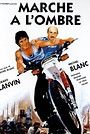
Music inspired by " Keep your head down " film music, 1984 french film commercially successful (+6M entries), many French César award nominations, directed by Michel Blanc filmmaker. A working class story from Marseille to New-York. A film accompagnied by music of XALAM, an african music band from Dakar Senegal which combines traditional instruments with modern jazz & funk sounds as saxophone. Some members of this musical band collaborated with Youssou N'Dour and also invited to play percussions on Rolling Stones' 1983 album named Undercover :
Concernin film music, Malian albino singer and songwriter SALIF KEITA, nicknamed "The Golden Voice of Africa", worked on different soundtracks as on YEELEN malian film : Jury Prize at the 1987 Cannes Film Festival. A four-time Grammy Award nominee, Salif Keïta has collaborated with major international artists, including Carlos Santana, Cesária Évora, and Peter Gabriel. He blends his voice with diverse styles while promoting musical heritage of Mali on international stage :


From a South-African perspective, LADYSMITH BLACK MAMBAZO is a vocal group founded in 1960, renowned for its traditional deep harmonies, and has notably collaborated with Paul Simon. The group is featured on the 1988 COMING TO AMERICA film soundtrack, directed by guitarist NILE RODGERS : producer and co-founder of the disco/funk group CHIC in the 70s, he won several Grammy Awards with Frenchies DAFT PUNK in 2014 :




To conclude this review, remind us ANGELIQUE KIDJO, a Beninese singer, songwriter, actress, 5 Grammy awards winner. She is now considered one of the greatest African artists, often referred to as the "Queen of Afrobeat", an icon of world music. Angélique Kidjo's music has been used in the film world, ranging from popular Hollywood films to an independent Italian film of NANNI MORETTI awarded by 1994 Cannes film festival. Italian Filmmaker Golden Palm winner in 2001 :



GYPSY
BALKAN EU & EASTERN TOUCH
2025
MUSIC : Renzo Djordan - Electro Gatlif
Inspired by the musical world of TONY GATLIF's films, particularly by the unique Gypsy energy of East Europe BALKAN : fillm music from Romania EU with Italian Touch " TUTTI FRUTTI " guided creative process to obtain this electronic Balkan music genre . Acappella part of the track comes from a live recording during a Gypsy wedding ceremony in Romania .
Tony Gatlif filmmaker often points that the Gypsy Balkans come from INDIA and that their language is close to Hindi and Punjabi. He has been recognized at the 2004 Cannes Film Festival chaired by Quentin Tarantino, notably with the Best Director Award for EXILS, illustrating his influence in the international film landscape :


A musical inspiration is TIME OF THE GYPSIES, directed by Emir Kusturica, nicknamed " the Fellini of the Balkans " : a film that blends realism and fantasy while following the life of a young Gypsy Romani boy in Macedonia ( Balkan / East EU ) and later in the Gypsy districts of Milan Italy. The music, composed by GORAN BREGOVIC, plays a central role : a mix of Balkan brass bands and Romani singing. A film awarded by 1989 Cannes film festival :

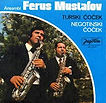
Nicknamed " The king of the Balkan saxophone ", FERUS MUSTAFOV has made his mark on the international scene thanks to intense, danceable music deeply rooted in the Gypsy traditions of North Macedonia ( Balkan / East EU ). Throughout his life, he remained rooted in popular music events (weddings, celebrations), far from commercial circuits :


It will not forget to mention the Balkan brass band from North EU Romania created in 90s, FANFARE CIOCARLIA, composed of Gypsy musicians. They perpetuate a very old musical tradition, passed down from generation to generation, especially centered around brass instruments and very fast rhythms that have earned them international renown, invited in famous NPR Music Show and music used in hollywood film music :
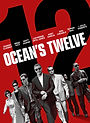
Regarding the keyboard part, it is inspired by synthesizer gliding notes, which are called Eastern modal scales : typical of Balkans, in the Turbo-folk musical genre. This style is used in film music of 2006 Hollywood blockbuster OCEAN ELEVEN, composed by frenchies LA CAUTION, where French actor Vincent Cassel performs " the Laser dance " inspired by brazilian capoeira :
MYSTERY OF THE BULGARIAN VOICES is an internationaly know musical project centered on the Romani female voices of the Balkans, highlighting the raw power, emotion, and spirituality of traditional Eastern European song. At the crossroads of Gypsy music, Balkan traditions, and the Romanian heritage, the project celebrates deeply expressive voices. The album won 1990 Grammy Award for Best Traditional Folk Recording and used in hollywood film music :

From a southern Balkans perspective, particularly Greece with Eastern influences, is the origin of a traditional greek melody used in Quentin Tarantino's film PULP FICTION opening music theme : MISIRLOU is a song often played with instruments and in a style similar to rembetiko (violin, bouzouki, oud). The world-famous music version used in the film, an instrumental cover, is played by american surf rock guitarist Dick Dale :


Similar rock guitar energy, but with an Eastern touch by combining traditional North African instruments as Derbouka and Bendir. Main musical theme from OMAR film, a french co-production by ICONOCLAST Group : a film about exile recently selected for Cannes Film Festival. The band, Raina Rai, was formed in 1980 in Paris by Algerian musicians and thanks to their popular rock style has toured internationally :


To conclude review about South Balkan and guitar, remind us Greek musician MIKIS THEODORAKIS and his composition for Zorba The Greek, greek-american coproduction selected in 1964 Cannes film festival and 3 Oscar winners in 1965. Also famous for his collaboration with american filmmaker Sydney Lamet on 1973 film Serpico with italo-american actor Al Pacino. Moreover with director COSTA GAVRAS on the 1969 Oscar-winning film Z. Greek Filmmaker 1982 Golden Palm winner :
EPILOGUE
MUSIC VIDEO
" We feel upon our own CULTURE in a way. We just keep digesting it and redigesting it. And after a while, there is no return, no nourishment, no depth. I think it's important the input of other CULTURES "
MARTIN SCORCESE

MARTIN SCORCESE
JURY PRESIDENT OF 51TH CANNES FILM FESTIVAL
1998

OFFICIAL INTERVIEW
bottom of page